
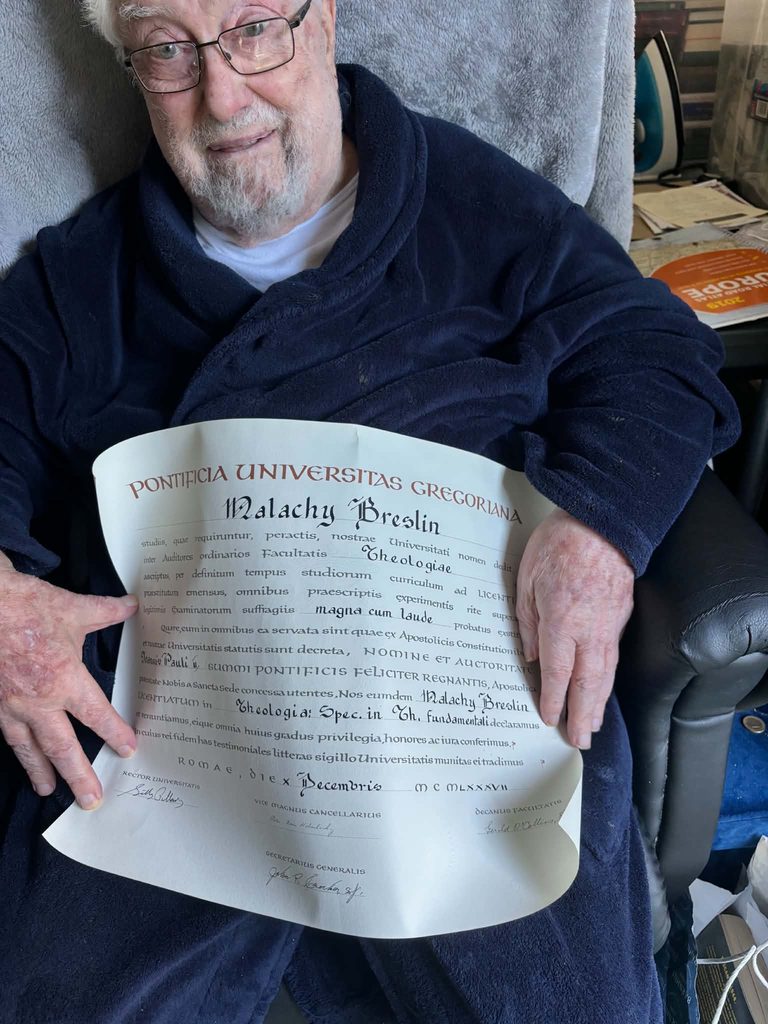
For the past several years, Peadar Breslin has been a service user of Blanchardstown Centre for Independent Living (BCIL). To those who know him through BCIL, he is a quiet, humble and unassuming man. There is little about his manner that would immediately suggest the extraordinary life he has lived. Yet behind that modest exterior is a story that stretches from the revolutionary period in Ireland to more than two decades spent working as a missionary across Africa, from developing African church music to teaching theology, and even to an encounter with Pope John Paul II in the Vatican.
Perhaps the most remarkable thing about Peadar’s story is that, despite the enormous distances he travelled and the many cultures and communities he encountered, one theme seems to connect almost every chapter of his life: bringing people together. Music, in particular, became a language through which Peadar could cross cultural, religious and social boundaries. It was a talent that began to develop in his youth and ultimately became an important part of his missionary work.
A family history rooted in a divided Ireland
Peadar was born in 1938, the eldest of seven children. His childhood was shaped not only by his immediate family but by the stories of those who had come before him. His grand-uncle also named Peadar Breslin, was involved with the IRA during the struggle for Irish independence and was associated with the split that occurred during the Civil War period where he followed and fought alongside Rory O’Connor (Director of engineering for the IRA). He was also given a Brevet-field commission for his leadership. Family stories told of his grandfather’s involvement in the fighting around Dublin, his imprisonment in Mountjoy and his eventual death during an attempted jailbreak. Historical records also list a Peadar Breslin among those associated with the Four Courts garrison in 1922.
The family experienced the divisions of the Civil War at a deeply personal level. Peadar recalls that his granduncle Christy, his grandfather’s brother, was taken from his bed by Free State forces and brought to the Navan Road, where he was shot. Peadar’s father, Thomas, was still a boy and went with his aunt to identify uncle’s body at the Mater Hospital. These were not simply distant events from a history book; they became part of the family memory that Peadar grew up with.
As a child, however, Peadar says he did not really understand the political differences behind the conflict. He was fascinated by the exploits of his grandfather and uncles, but he was too young to appreciate the depth of the divisions that had split the country. Only later did he begin to understand the politics and competing loyalties that had shaped his family’s history. Those early stories gave him strong republican sympathies, but they also gave him a personal understanding of how deeply divisions can affect ordinary people and their families.
A childhood full of music, sport and theatre
Peadar describes his school days at O’Connell Schools as being “full to the brim.” He played hurling and was a member of both the junior and senior colleges teams. He joined the latter as one of its youngest players, an achievement that earned him a medal he remains proud of. He also became involved in school theatre productions and remembers becoming somewhat infamous in his local area when he had to grow his hair for one of his roles.
Yet it was not sport, theatre or even music that initially led Peadar towards the priesthood. During his final year at school, he went on a cycling holiday in Kerry with two friends. One evening they stayed with a local family whose home was connected to a priest. The priest was going to celebrate Mass for the family in a nearby school, and Peadar and his friends went along. Until that moment, he had never seriously considered becoming a priest. Watching the priest celebrate Mass, however, something unexpectedly struck him. He suddenly thought about what a fulfilling and lovely life the priesthood could be and for reasons he could not fully explain at the time the idea stayed with him.
When he returned home, Peadar began thinking seriously about what he wanted to do with his life. He went to meet the Franciscans at Church Street and admitted that he knew very little about St Francis. He was given a book about St Francis, began reading it and eventually decided that he wanted to join the order. In September 1956 he entered the Capuchin Franciscans.
The beginnings of a musical life
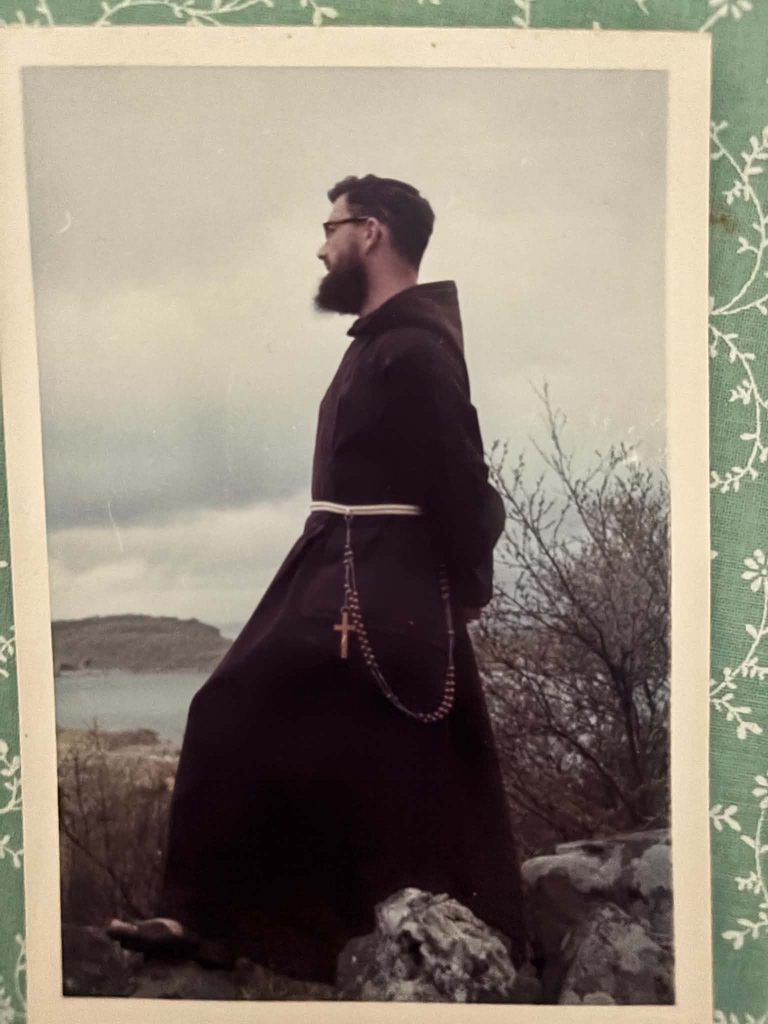
Peadar’s years of study combined philosophy, theology and music. He completed a BA in Philosophy at University College Cork, while his growing musical ability began to attract attention. Because of his experience with the piano and his involvement with choirs, he was placed in charge of music during the summer months when the university was quiet. His provincial, James O’Mahony recognised his musical talent and encouraged him to take music rather than geography as an elective.
Peadar ultimately pursued philosophy and music concurrently. It was a decision that would have a profound impact on the rest of his life. He was originally expected to travel to Rome to study liturgy and return to Ireland to teach it, as liturgy was becoming an increasingly important area of study within the Church. But fate intervened.
A young priest who had been due to go to Africa became ill, and Peadar was asked to take his place. Instead of travelling to Rome, he found himself heading for Zambia. He arrived in Livingstone and began teaching in a local school. Zambia had only recently achieved independence, and Peadar encountered a society still heavily influenced by its colonial past. Many of the pupils at the school were the children of British civil servants, with only a small number of African students.
Peadar arrived with what he describes as a youthful “spring in his step”, he was fascinated by what he was seeing. He soon realised, however, how little some of the young people around him understood about the country in which they lived. There was an enormous gap in understanding where the local African communities were concerned. This was mainly due to the lack of diversity in Livingstone at the time. He recalls thinking at that time it would be very difficult to return to Ireland and talk about Africa without explaining the extraordinary ignorance and separation he had witnessed.
Finding his place through music
Peadar was eventually moved to Limulunga in Barotseland, where he helped teach African boys who were considering entering the priesthood. He began learning the local language, ‘Silozi’ and spent several years there before returning to Livingstone and eventually moving to Mongu.
It was in Mongu that Peadar’s musical background became particularly important. There was an effort underway to incorporate local musical traditions into the Church, while also making religious programmes available to people speaking the many different languages found throughout Zambia. Peadar became involved in recording sermons and helping develop music that reflected local traditions. With dozens of languages and numerous distinct cultural traditions across the country, it was an enormous undertaking.
Peadar worked alongside religious sisters, one a talented African musician, and another who had studied music at Queen’s University Belfast. Together they began developing church music based on local songs and traditions. What they discovered was that African music could not simply be adapted without understanding the cultural meaning behind it. Different rhythms were associated with different occasions: marriage ceremonies, births, harvests, funerals and even warfare. One Zambian teacher explained it simply to Peadar in ‘Lozi’, the local dialect, “Pilu Ya Lipina Zaluna Ki” which translated to “The Heart of Our Music is in the Drum”. This also meant that great care had to be taken when introducing music from one region into another. For example a rhythm that had one meaning in Mongu could mean something completely different in Livingstone and could cause offense if used incorrectly.
His work attracted the attention of musicologists in Africa and eventually researchers connected with American universities. He was offered the possibility of pursuing a PhD based on his ideas about using music to understand the relationships between different African tribes. Such study would have required him to neglect his missionary work so he did not pursue it.
A chance encounter in Francistown
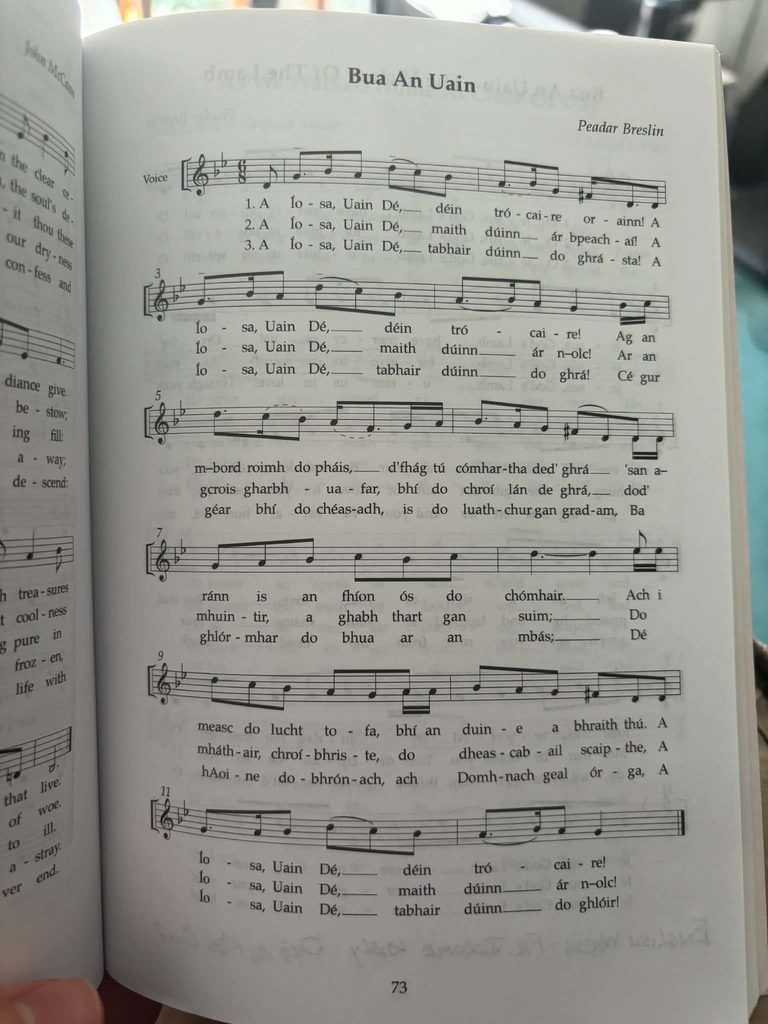
One of the stories Peadar tells most fondly occurred during his travels between southern Africa and Zambia. He would occasionally drive from the Caprivi region to Pretoria to shop, a journey that could take a day and a half. With long stretches of road ahead of him, he would sing at the top of his voice to keep himself awake. Eventually, when he had exhausted all the songs he knew, he began composing his own. One of those compositions, “Bua An Uain” (The Victory of the Lamb), was later published and also won a prize.
It was another example of the way music seemed to find its way into every part of Peadar’s life. There was also a remarkable chance encounter in Francistown, Botswana, which he describes almost as a miracle.
While travelling back to his mission, Peadar decided to stay overnight in Francistown. He visited Our Lady of the Desert, a local mission, where he encountered a priest who appeared agitated and distressed. The priest explained that his bishop had told him he needed to do something about music in the Church, but he had no idea where to begin. He had a meeting with children that afternoon and did not know what he was going to do.
Peadar told him that his miracle had arrived.
The two went to meet the children and within the next hour or hour and a half Peadar had produced a hymn with them. In Peadar’s telling that chance meeting marked the beginning of African church music in Botswana. Whether by coincidence or providence it was another moment when two seemingly unrelated paths crossed and produced something neither person had expected.
It is perhaps why Peadar looks back on his life and sees connections everywhere. Events that happened decades apart, he says, often seem to have a relevance that he could not possibly have understood at the time.
Katima Mulilo and the divisions he encountered
Peadar then spent approximately nine years in Katima Mulilo, where he also served part-time as a chaplain to the South African Army. His experiences there exposed him to some of the sharpest religious divisions of his life.
He recalls that many of the Afrikaners he encountered were deeply suspicious of Catholics because of their Calvinist Protestant background. At times, he says, people would rather cross the road than speak to him because he was a Catholic priest. His relationship with one local army major was particularly difficult, as the two men held very different views about religion and the role of the Church.
Peadar recalls telling the major that he was a Catholic priest and that his responsibility was to make better Christians of the people he encountered, not better soldiers. Yet despite these tensions, Peadar found ways to work with people across those divisions. Many of the soldiers were Catholics or Anglicans rather than Calvinists, and they asked Peadar to celebrate Mass because they could relate to his sermons and understand his approach.
His family history in Ireland gave him an unusual perspective on these experiences. As a young man he had grown up surrounded by stories of a country divided by political loyalties, religion and competing visions of Ireland’s future. In Africa he encountered different histories and different divisions, but he recognised the human consequences of separation.
The unlikely golf course
During his years in Katima, Peadar also became involved in building a golf course. He had noticed how much the Afrikaners enjoyed the game and thought a golf course would provide an opportunity for people to come together around something they enjoyed.
Peadar had experience working in construction with his father growing up but had virtually no golfing experience. As he puts it. “I could just about lift a pick.”
One of the local Afrikaners decided to help him. Together they went to the proposed site and began working. Before long, the Afrikaners had taken over much of the construction themselves and became heavily involved in building the course. Eventually, the course became affiliated with the South West African Golf Union.
It is an amusing story, but it also captures something important about Peadar’s personality. Even in environments where people were separated by race and religion, he continually found ways of engaging with people and creating something together.
Rome and an unforgettable encounter
After his years in Africa, Peadar was called to Rome to become a professor of theology. He enrolled in the Biblicum to study which was run by the Jesuits. He initially wanted to study biblical theology but was told he would first need to master Greek and Hebrew. After three years in Rome he completed his studies and attained an STL in Theology, Magna Cum Laude.
But one of his most treasured memories from Rome had nothing to do with examinations or academic titles.
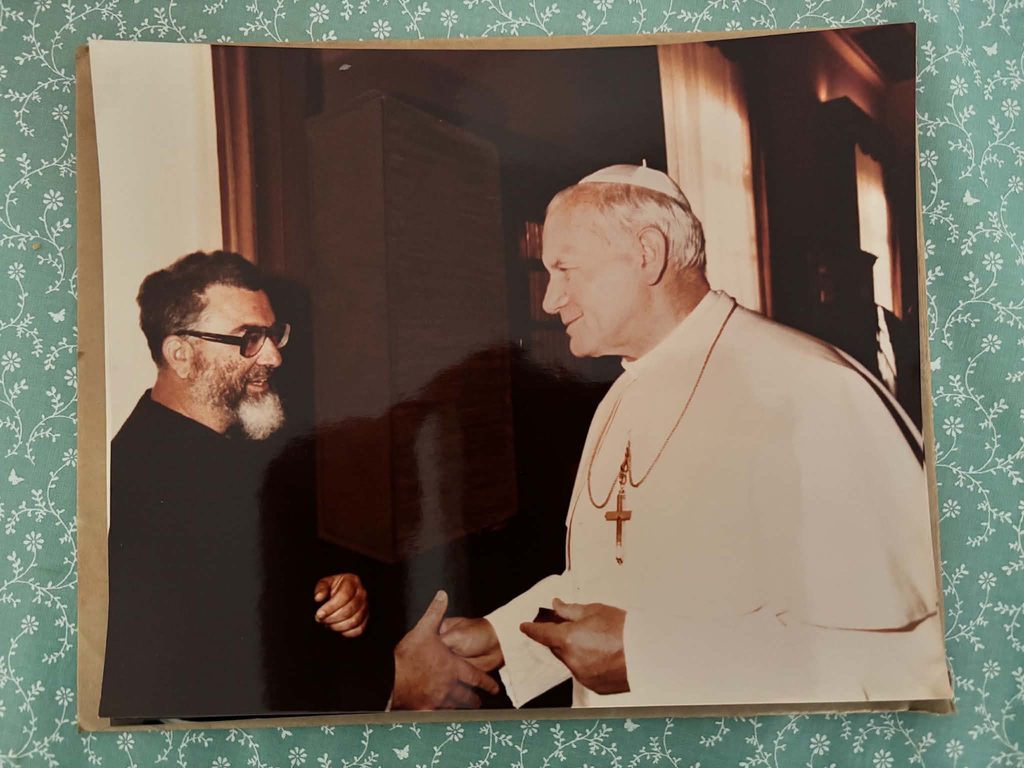
Pope John Paul II was preparing for a planned visit to Ireland and wanted to practise celebrating Mass in English. Peadar’s rector approached him one day and told him there was somebody on the telephone who wanted to speak to him. It was the Pope’s secretary. Initially, Peadar thought somebody was playing a joke on him.
He was instructed to arrive at the ‘Porto Bronzo’ (The Bronze Gate) of the Vatican at 7pm on a Thursday and was told he would need to bring a companion. He arrived with an American colleague and was escorted into the Pope’s private quarters. After which they began the mass ceremony. He waited for the Pope to finish his prayers and then stood by him and together they said mass.
Peadar admired him for his grasp on English after being given such a short amount of preparation with the language. John Paul II was Polish and was expected to move between several languages during his demanding schedule. At the end of the meeting the Pope gave Peadar a set of rosary beads as a memento. Peadar brought them home and gave them to his mother.
It was, he says, a lovely memory to have.
Rector Magnificus
Following his time in Rome, Peadar returned once again to Zambia. Outside Lusaka, at Makeni, the three Franciscan families came together to establish a seminary. Peadar became the superior among the Capuchins and rector of the seminary, carrying the rather grand title of Rector Magnificus.
It was a remarkable progression from the young priest who had first arrived in Zambia and stood in front of a classroom of British children. Now he was teaching theology to students from across Africa, particularly from East Africa, including Nairobi and Uganda, many of whom were starting their own religious journey.
After more than two decades in Africa, Peadar finally returned to Ireland in 1995.
Coming home
Returning to Ireland marked another new chapter, he completed his PhD and decided to continue his interest in music. He joined the Maynooth choir and spent ten years there eventually taking charge of the bassists.
By then, music had accompanied him through almost every stage of his life. It had taken him from school choirs in Ireland to churches in Zambia and Botswana. It had helped him understand cultures whose languages he did not initially speak. It had brought him into contact with musicians, academics, priests, soldiers and communities separated by enormous cultural and religious differences.
And perhaps most importantly, it had given him a way of bringing people together.
Today, Peadar’s life is very different from those years of travelling across Africa. He has been a BCIL service user for seven years, with BCIL’s services helping him to remain connected with the community and maintain his independence.
Much of Peadar’s life has been about helping people remain connected — to one another, to their faith, to their culture and to their communities. His story is one of extraordinary journeys, but it is equally a story about the people he met along the way.
From a family shaped by the divisions of Ireland’s revolutionary period, to a young priest discovering his vocation in a schoolhouse in Kerry; from the classrooms of Livingstone to the churches of Mongu; from the racial and religious divisions of Katima Mulilo to a golf course built by people from different communities; from composing music on the long roads of southern Africa to celebrating Mass alongside a Pope in the Vatican, Peadar’s life has crossed boundaries that most people will never encounter.
And yet he tells these stories without any sense of self-importance.
There is no grandstanding in Peadar’s recollections. Instead, there is a quiet sense that life simply unfolded as it was meant to. One opportunity led to another, one chance encounter led to another, and people appeared at precisely the moments when they were needed.
It is an outlook that is perhaps best captured in the words of St Julian of Norwich, a quotation that holds particular meaning for Peadar: “God is in heaven, all is right with the world, and all will be right with the world.” After a life that has taken him across continents, cultures and communities, through moments of uncertainty as well as extraordinary experiences, Peadar’s story seems to embody that quiet faith — a belief that, despite the twists and turns of life, there is a deeper connection and purpose running through it all.
Perhaps that is what remains most striking about Peadar’s story: not simply the places he has been or the things he has witnessed, but the calm sense with which he has accepted each new chapter, and the belief that, somehow, each one has its place.
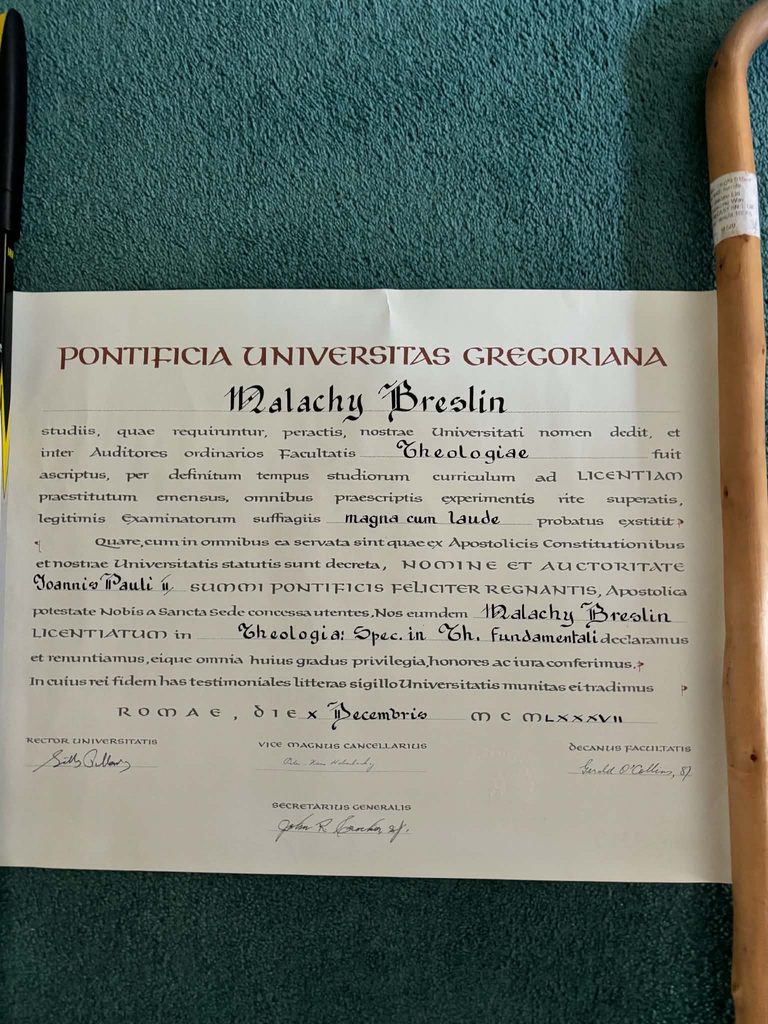
PhD in Theology , Magna Cum Laude