For disabled people and disability organisations, keeping up with consultations, policy decisions, advocacy campaigns and changes that affect everyday life can be a challenge. Information is often spread across different websites, organisations and government departments — and it is not always easy to find, understand or access.
That is the gap the Disability Participation News Hub is working to fill.
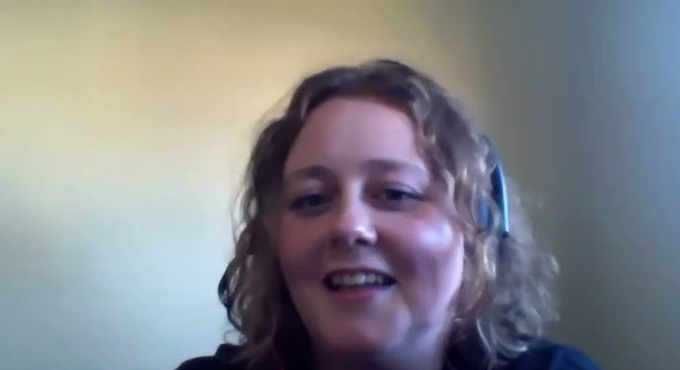
In a recent episode of Disability Matters, John Comiskey spoke with Nicole Lonican, founder of the Disability Participation News Hub, about the importance of accessible information, participation and ensuring that disabled people have a meaningful voice in decisions that affect their lives.
Nicole describes the Hub as “an independent, small, disabled-led non-profit” which aims to centralise disability advocacy news in Ireland.
“We centralise all information in relation to rights and decision-making that is affecting disabled people’s lives,” she explains.
The goal is simple: to make sure people have the information they need to participate.
“We do this to make sure that disabled people and disabled persons’ organisations and anyone who is involved in disability advocacy is kept up to date with what’s going on, with important decision-making that’s affecting their lives, so that they can be a part of that.”
Making information easier to find
The Disability Participation News Hub provides information through its website, social media, events, collaborations and a free weekly newsletter.
Nicole says the service is open to everyone. There is no membership requirement — people simply sign up for the newsletter.
The Hub monitors consultations and parliamentary activity, including the Oireachtas committees dealing with disability issues, and provides links to relevant information. The following week, it can also follow up on what happened.
For Nicole, one of the biggest challenges is that important information is often scattered across many different sources.
“It’s really hard to find all of that information in one place,” she says. “There’s a lot of information in a lot of different places, hard to keep on top of that.”
Accessibility can create another barrier.
“Sometimes these places are not accessible, sometimes it’s hard to find that information and then understand that information too and what it means and put it in context.”
The News Hub aims to make that process easier by bringing the information together and explaining where people can find it.
Advocacy takes many forms
One of the interesting points Nicole makes is that advocacy does not always look the way people might expect.
The Hub highlights disability organisations and their work, but also promotes disabled-led events, arts, exhibitions and community initiatives.
“Advocacy can happen in so many different forms,” Nicole explains.
“It’s not just always on the streets… It’s not just through submissions… It can take place in so many different ways.”
She points to art, writing, consultations and community groups as examples of advocacy.
“It can be through art, it can be through writing, it can be through doing the consultations, but it can also be through people setting up these WhatsApp groups and community groups and checking in with disabled people.”
For Nicole, recognising these different forms of participation is important because advocacy is ultimately about people being involved and having their voices heard.
Having a say in decisions
John and Nicole also discussed the importance of government consultations.
A consultation gives people an opportunity to share their experiences and views before decisions are made.
Nicole uses the Cost of Disability consultation as an example of why participation matters.
“Having your lived experience as well as collective lived experience feeding into decision-making processes, consultations are really important for that.”
But she believes participation should go further.
The aim should not simply be to ask disabled people for their opinions after decisions have already been shaped.
“We are really pushing for, as well as many other groups for many, many years, for disabled people to be part of the decision-making table.”
In other words, disabled people should be involved before the consultation begins, rather than only being invited to respond afterwards.
“These are all important aspects that we say disabled people should be involved in each part of it.”
Disability is part of every area of society
Another important point raised in the interview is that disability issues cannot be separated from wider society.
Consultations and policy decisions can cover everything from disability services to climate change, migration and other areas of public policy.
Nicole says disabled people have different backgrounds and experiences, meaning that disability needs to be considered across all areas of decision-making.
“Disabled people have all different backgrounds and identities,” she says.
“Disabled people need to be part of all of those processes and all of those different departments that are making these decisions as well.”
Making information accessible
Accessibility is also central to the way the Disability Participation News Hub works.
Nicole explains that the organisation is continually looking at ways to improve accessibility and listens to feedback from its readers.
The Hub also provides resources in different formats where possible, including information relating to the Optional Protocol to the UN Convention on the Rights of Persons with Disabilities.
Nicole describes the Optional Protocol as an important complaints mechanism that allows people to bring concerns about rights violations to the UN Committee.
“It’s a really important way to have your rights vindicated in Ireland as well as internationally and bring them to an international stage.”
The News Hub has created an accessible resource explaining the process, including read-aloud, PDF and Word versions.
A small organisation growing through word of mouth
Despite the amount of information and work involved, Nicole explains that the Disability Participation News Hub is a very small team.
Its growth has largely happened through people sharing the service with colleagues, friends and organisations.
“We don’t get out much. We’re a very small team and we don’t get time to advertise or do many of these lovely interviews,” she says.
“Our organisation and our newsletter has grown literally through word of mouth.”
That makes the support of readers particularly important.
Nicole encourages people to share the newsletter if they find it useful and to send information about events, campaigns or other work that could be included.
“We love to hear from you.”
The Hub also offers training and consultancy for organisations interested in improving their work around disability participation and advocacy.
Everyone has a role in participation
Towards the end of the interview, Nicole returns to one of the central ideas behind her work: equitable access to information and opportunities to participate.
The Disability Participation News Hub is not simply a source of news. It is intended to help people understand what is happening, find opportunities to have their say and connect with others involved in disability advocacy.
Whether someone is an experienced campaigner, works for a disability organisation, is new to advocacy or simply wants to understand more about disability rights, Nicole encourages them to explore the Hub and its weekly newsletter.
“It’s a nice place if you are kind of dipping into advocacy or maybe you’re new in an advocacy role or you want to learn more.”
At its heart, the message of the interview is clear: people cannot participate in decisions if they do not have access to the information they need.
By bringing that information together and making it more accessible, the Disability Participation News Hub is helping more people stay informed — and, importantly, helping ensure that disabled people’s voices are part of the conversation.
More information: Disability Participation News Hub
This interview aired on Disability Matters on 92.5 Phoenix FM, a programme produced by Blanchardstown Centre for Independent Living (BCIL).
Tune in to Disability Matters Thursdays at 4PM | Repeats: Mon 3AM, Tue 3AM & 7AM | Also available on Mixcloud and on bcil.ie/radio.
Compiled by Valentyna Hordiichuk