

For Jessi Abbey, the fight for access to Skyclarys was never simply about a drug. It was about time: time to watch her five-year-old daughter Remi grow up, time to continue working and living independently, and time to experience the ordinary moments in life that many people take for granted. Jessi, who works at BCIL, lives with Friedreich’s Ataxia (FA), a rare inherited neurological condition that progressively affects balance, coordination, mobility and muscle function. With more than 200 people living with the condition in Ireland, Skyclarys offered Jessi and others living with FA the possibility of slowing the progression of a disease that has already changed so much of their lives.
When the HSE Drugs Group recommended against reimbursement of Skyclarys earlier this month, Jessi was devastated. Rather than accept the decision quietly, she began using her voice to raise awareness of the issue. Through Facebook, radio interviews, meetings and a public demonstration in Dublin, Jessi helped bring national attention to the campaign for access to the treatment. Her efforts, alongside those of other people living with FA, their families and supporters, helped ensure that the people behind the statistics were heard.
Then, on 25 August, came the news Jessi and the wider FA community had been hoping for: the HSE announced that it had approved reimbursement of Skyclarys for eligible patients with Friedreich’s Ataxia. The decision followed intensive negotiations with Biogen, the manufacturer of Skyclarys, which resulted in a substantially improved financial offer to the HSE. For Jessi, the announcement represented much more than a healthcare decision. It represented hope for a future that, when she was first diagnosed, she feared she might never have.
A diagnosis that changed everything
Jessi was just 25 when she was diagnosed with Friedreich’s Ataxia. The diagnosis came on the day Ireland entered its first COVID-19 lockdown in 2020, when the country was already facing unprecedented uncertainty. Jessi received a phone call from the Mater Hospital informing her of the diagnosis. Because of the pandemic, she could not attend the hospital in person, and many appointments had been cancelled. The doctor delivering the news was apologetic and advised her not to Google the condition, but, as Jessi admits, she did what most people would have done and searched for answers herself.
“I thought my life was over.”
At the time, Jessi was working as a preschool teacher and had always been committed to working since leaving school. She had grown up in a working-class family with a strong work ethic and had built a career working with children. Suddenly, she was faced with a rare genetic condition that she knew very little about and a future that seemed completely uncertain. Her neurologist told her that the condition could mean she would be dead by the age of 40. Jessi broke down crying and then had to face the devastating task of telling her family.
Friedreich’s Ataxia is caused by inheriting a faulty copy of a particular gene from both parents. It is rare, and Jessi was the first person in around 100 years of her family history to develop the condition. However, the signs had been present for years before she received her diagnosis.
“They thought I was just clumsy”
Jessi remembers experiencing symptoms from around the age of 19. She would regularly lose her balance and trip over her own feet, something her friends initially joked about and put down to her simply being clumsy. She also experienced severe headaches and eventually went to the Mater seeking medical help. Doctors carried out a number of tests, including asking her to walk in a straight line, and recognised that what they were seeing was not normal for someone so young.
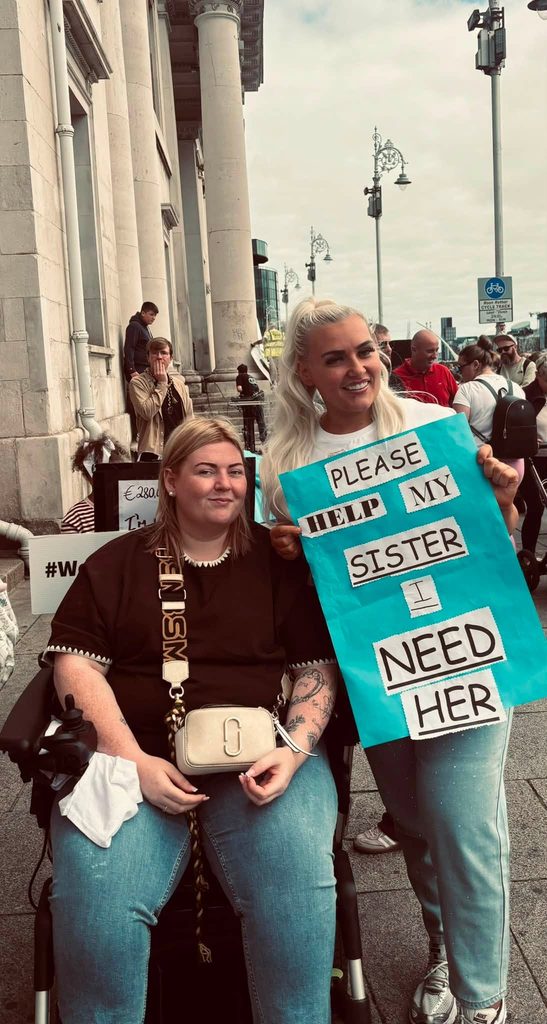
What followed was a long period of investigations and uncertainty. Despite the symptoms beginning in her late teens, Jessi would not receive a definitive diagnosis until 2020. In the years that followed, the progression of FA gradually began to affect her independence. In 2019 she started using crutches, and by 2023 she was using a wheelchair.
The transition to wheelchair use was extremely difficult. Jessi had always been independent and active, and initially she found it very hard to accept that she now needed a wheelchair. She remembers feeling so overwhelmed by the change that she once said she would rather die than use one. Over time, however, her perspective changed. Her wheelchair has not taken away her independence; instead, it has allowed her to maintain it. Without it, Jessi says she would struggle to work, bring her daughter to school or even go to the shops.

Changing perceptions of disability
Jessi’s experience of becoming a wheelchair user has also changed the way she thinks about disability and the assumptions people can make. Before her own condition progressed, she admits that she had some of the same misconceptions about wheelchair users that are common throughout society, including the assumption that someone who uses a wheelchair might not be capable of doing certain things. Living with FA has completely changed that perspective.
Jessi is particularly passionate about challenging the pity that wheelchair users can sometimes receive. She does not want people to look at her and assume that her life is defined by what she cannot do. Instead, she wants people to recognise what her wheelchair allows her to do. Her sense of humour is one of the ways she helps people feel more comfortable around disability, joking that if someone says they feel sorry for her, she can simply respond, “You’re the one who’s standing and I’ve got a seat.”
She also believes that attitudes towards disability need to change from a young age. Jessi remembers an experience in Blanchardstown Centre when a child pointed at her wheelchair and the child’s mother immediately became embarrassed and tried to quiet them. Rather than seeing the child’s curiosity as something inappropriate, Jessi spoke to them and explained that her legs did not work. She believes children should be allowed to ask questions because when adults immediately tell them to stop, they can unintentionally teach them that disability is something shameful or something that should not be discussed. For Jessi, disability should be normalised as part of everyday life.
Remi is at the heart of everything
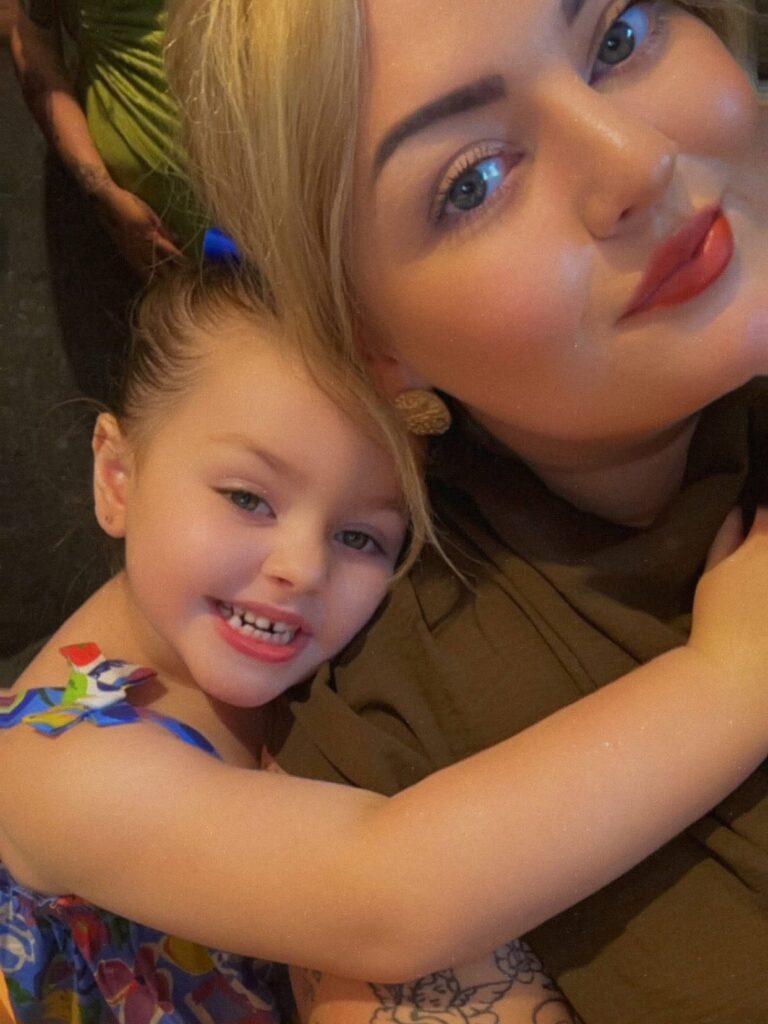
At the centre of Jessi’s life is her five-year-old daughter, Remi, whom she describes as her “whole world”. Living with FA can be physically and emotionally exhausting, with aches, pains and difficult days when simply getting out of bed can feel like a challenge. Jessi says that Remi is the motivation she needs to get up every morning and keep moving forward rather than allowing herself to become consumed by the difficulties of the condition.
Jessi knows that Remi is growing up differently from many other children because she has experienced first-hand what it is like to have a mam who uses a wheelchair. She sometimes worries that Remi could face questions or difficulties at school because of her mother’s disability, but she also knows that Remi has grown up seeing disability as part of normal family life. To her, her mam’s wheelchair is simply something that is part of their everyday routine.
Jessi remembers a family holiday to Amber Springs when her nephew casually commented that she was able to have a shower because the accommodation had a wheelchair-accessible bathroom. For Jessi, the comment was a positive example of how her family has adapted to her disability and how accessibility has become normalised. It is exactly the kind of attitude she would like to see more widely in society: not seeing disability as something unusual, but simply recognising what people need to live their lives.

Why Skyclarys matters to Jessi
That desire to continue living independently and to see her daughter grow up is at the heart of Jessi’s campaign for Skyclarys. The treatment, also known as omaveloxolone, is designed to slow the progression of Friedreich’s Ataxia. While it is not a cure and does not reverse the damage already caused by the condition, the possibility of slowing progression is hugely significant for someone like Jessi, whose balance and mobility have already been seriously affected.
Earlier in August, the HSE Drugs Group recommended that Skyclarys should not be reimbursed. The decision raised concerns about the cost of the medicine and uncertainties within the clinical evidence. At the listed price, Skyclarys had been reported as costing approximately €280,000 per patient per year, a figure that made the potential cost of treating more than 200 people in Ireland extremely significant.
For Jessi, however, the issue was never simply about the figure attached to the medicine. She felt that behind the financial calculations were real people with families, jobs, ambitions and futures. She was particularly upset by the feeling that people living with FA were being discussed as statistics rather than individuals. After hearing the news that reimbursement was not being recommended, she spoke passionately about her right to live and her determination to have a future with her daughter.
“How dare you talk about me? I have a right to live and everything to live for.”
Finding her voice
Jessi is naturally a private person and says that she would normally be uncomfortable with drawing attention to herself. The Skyclarys campaign changed that. She realised that if people living with FA were going to be heard, somebody needed to tell their stories and explain what the decision meant for real families.
She began raising awareness through Facebook, sharing information about Friedreich’s Ataxia, the proposed reimbursement decision and the campaign for Skyclarys. Her posts attracted significant attention and helped the issue reach people who may never previously have heard of FA. As the campaign grew, Jessi also began speaking publicly through radio and media interviews, despite the fact that putting herself in the spotlight was outside her comfort zone.
Jessi appeared on RTÉ Radio 1’s Liveline twice as part of the campaign and also featured in RTÉ News coverage ahead of a crucial public meeting about Skyclarys. Speaking openly about her own experiences, she helped explain what the progression of FA actually means for someone living with it. She spoke about how quickly her condition had changed, highlighting the reality that only a few years earlier she had been able to walk but was now reliant on a wheelchair.
Her message was clear: if the disease continued to progress, what would the next few years look like without access to a treatment that could potentially slow it down?
Taking the campaign to the streets
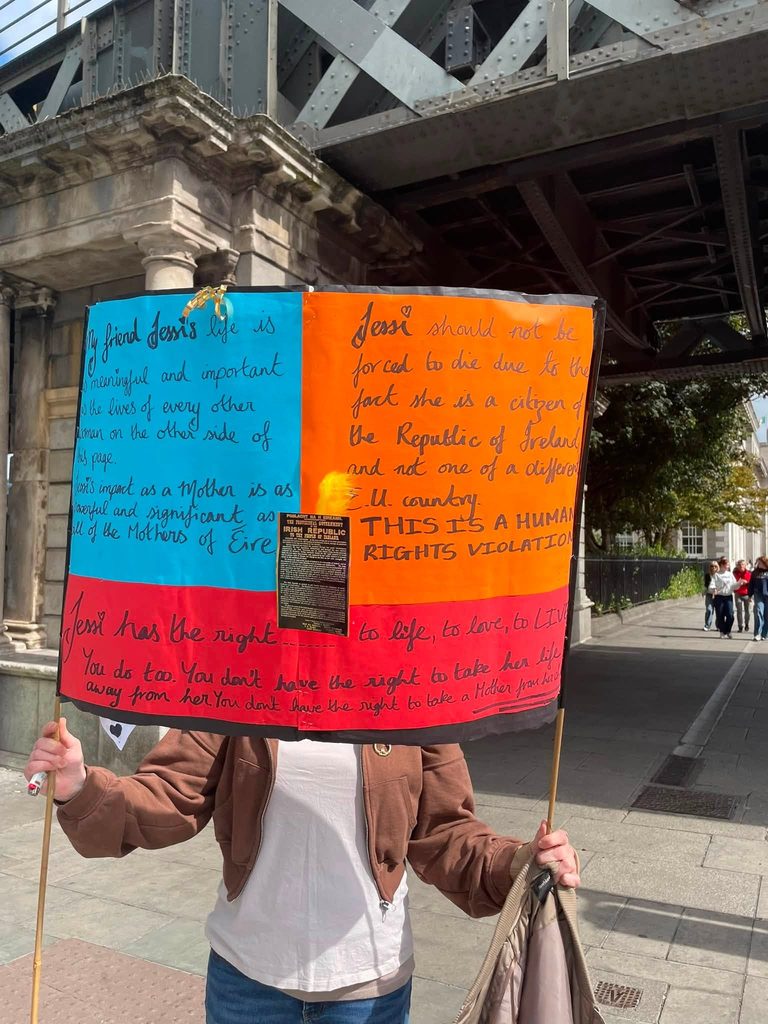
As public awareness grew, Jessi became involved in organising and promoting a demonstration in Dublin on Sunday, 23 August. Alongside other people living with FA, their families and supporters, she helped raise awareness of the event through social media, radio stations and podcasts, encouraging people to attend and show their support.
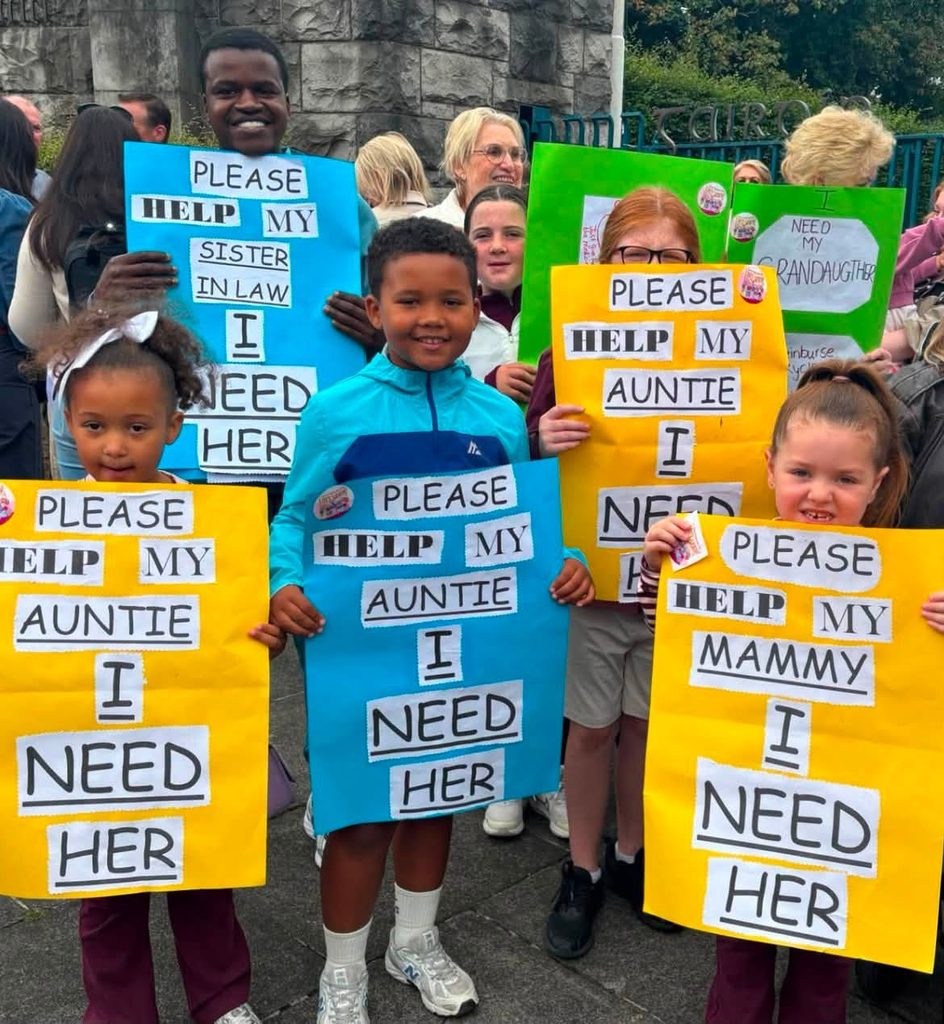
The demonstration at the Garden of Remembrance brought together members of the FA community and supporters who wanted the HSE to reconsider the reimbursement decision. Jessi had helped get the message out, but she was no longer speaking only for herself. She was speaking for people across Ireland living with a rare and progressive disease, many of whom feared what further progression could mean for their independence and quality of life.
For Jessi, the protest was about giving people with Friedreich’s Ataxia a chance. She wanted the HSE and the wider public to understand that the people affected by the decision were not just numbers on a spreadsheet. They were parents, children, workers, partners, friends and members of their communities who wanted the opportunity to continue living their lives.
A decision that brought hope
Just two days after the protest, the HSE announced its final decision.
On 25 August 2026, the HSE confirmed that it had approved reimbursement of Skyclarys for eligible patients living with Friedreich’s Ataxia in Ireland. The decision followed further negotiations with Biogen, the manufacturer of Skyclarys, which resulted in a significantly improved commercial offer. The HSE said the new agreement was substantially different from the terms previously considered and, alongside the significant unmet need for people living with FA, changed the balance of the decision.
While the exact financial terms remain confidential and some administrative arrangements still need to be finalised, the decision means that eligible patients in Ireland will now be able to access Skyclarys through the HSE.
For Jessi, the announcement marked the culmination of weeks of campaigning, speaking publicly and sharing her own experience of living with FA. What began with a devastating diagnosis over the phone during the first COVID-19 lockdown had led her to national radio, news interviews and a major public protest, where she stood alongside others in the FA community and called on decision-makers to see the people behind the statistics.
More than a campaign
It would be easy to look at the Skyclarys story as a debate about healthcare funding, pharmaceutical costs and reimbursement decisions, but Jessi has helped show that there is a person behind every statistic.
Her journey with Friedreich’s Ataxia began when she was just 19 and started experiencing symptoms that were initially dismissed as clumsiness. It continued through years of uncertainty, a life-changing diagnosis at 25, the loss of her mobility and the difficult transition to wheelchair use. Yet alongside those challenges, Jessi has continued to work, raise her daughter, maintain her independence and challenge the assumptions people make about disability.
Her work at BCIL has become an important part of that independence. After having Remi, Jessi believed she might not be able to return to working with children, so she completed a business course before joining BCIL. She has since developed her computer skills, taken on responsibility and embraced the opportunity to meet different people through her work. She says she loves the freedom her job provides and hopes her own experience can show other people with disabilities that there are opportunities available to them.
The Skyclarys campaign has become another extension of that determination. Jessi started by sharing information on Facebook, then found herself speaking on national radio, appearing in news coverage, contacting media outlets, helping organise a public demonstration and speaking openly about the most personal parts of her life. She did it because she knew that remaining silent was not an option.
Jessi once believed that her diagnosis meant her life was over. Today, she is a working mam, a wheelchair user, an advocate for disability awareness and a voice for people living with one of Ireland’s rarest diseases. Most importantly, she is someone who still has everything to live for.
Her greatest hope is simple: to continue working, to maintain her independence, to challenge perceptions of disability, and to watch her little girl grow up.
The HSE’s decision to reimburse Skyclarys does not take away the challenges Jessi faces living with Friedreich’s Ataxia, and it is not a cure. But it offers something incredibly valuable: the possibility of slowing the progression of the disease and preserving precious time and independence.
For Jessi, that possibility means more time with Remi, more time doing the work she loves, and more time living the life she fought so hard to protect.
After everything she has been through, Jessi is no longer simply asking people to understand Friedreich’s Ataxia.
She is asking them to see the person living with it.