A Message from Our Team
August has been a month of powerful stories, important campaigns and reasons to hope. From Jessi Abbey’s campaign for access to Skyclarys and Theresa’s story of living with Hurler syndrome, to new Disability Matters interviews and upcoming community events, this month’s newsletter highlights the people and issues at the heart of independent living.
This Month at a Glance
- 🎙 Disability Matters: New conversations on brain injury, cerebral palsy and advocacy
- 💪 Jessi’s Campaign: From speaking out to a major breakthrough on Skyclarys
- 📖 Theresa’s Story: Living with Hurler Syndrome and building independence
- 📢 Coming Up: BCIL Community Expo for the International Day for the Eradication of Poverty
- 🚌 Budget 2026: What new transport funding could mean for disabled people
🎙 Disability Matters – Giving a Voice to Disability
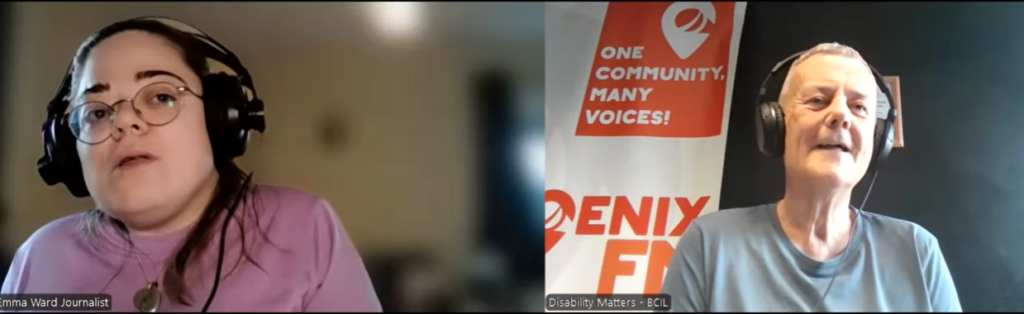
Every Thursday at 4.00pm on Phoenix 92.5 FM, Disability Matters brings listeners inspiring conversations, practical information and powerful stories from people with lived experience of disability. Produced by BCIL and presented by John Comiskey, the programme highlights the issues that matter most to disabled people, their families, carers and the wider community.
Featured interviews this month include,
Rebuilding Lives After Brain Injury
An acquired brain injury can change a person’s life in an instant. But the impact does not stop with the individual — it can affect families, relationships, work, education, independence and almost every aspect of everyday life.
Living with Cerebral Palsy and Speaking Up for Change: Margaret Griffin on Advocacy and Accessibility
Finding Her Voice: Emma Ward on Disability, Advocacy, Representation and Making Change
What does it mean to grow up as a young disabled person and an Irish Traveller — and then decide to use your voice to challenge the barriers faced by both communities?
More interviews on bcil.ie.
⭐ Living Independently: Stories That Inspire
Standing Up for a Future: Jessi’s Skyclarys Campaign
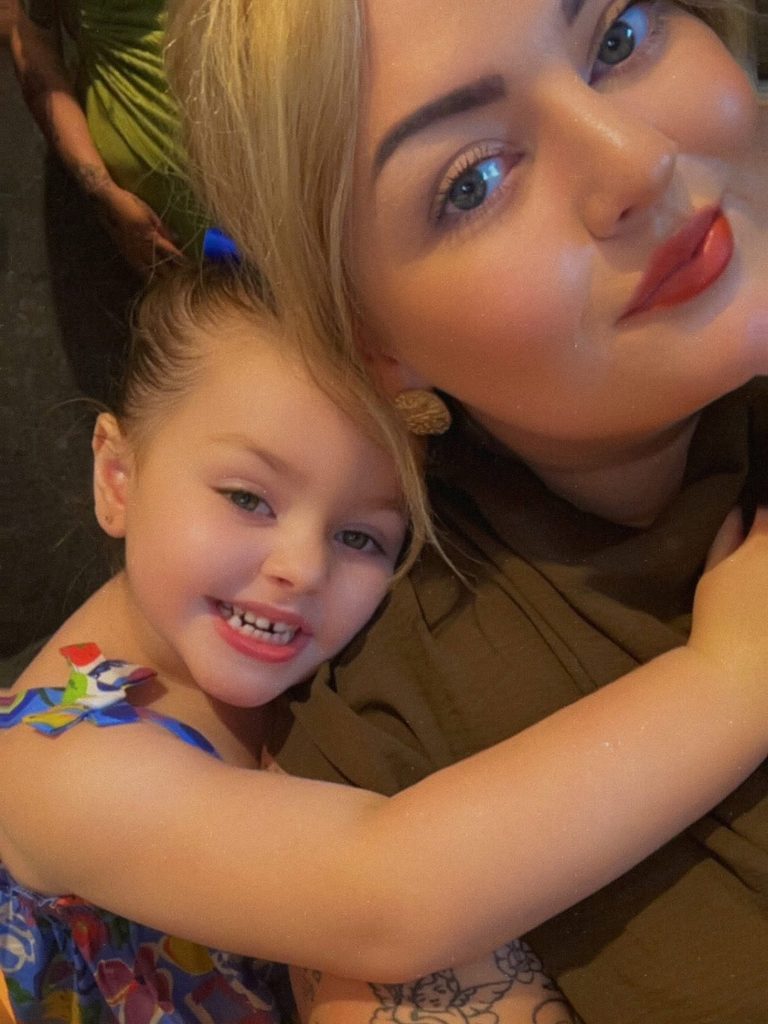
For Jessi Abbey, the campaign for access to Skyclarys was about much more than access to medication. It was about having more time — time to watch her five-year-old daughter Remi grow up, continue working, maintain her independence and enjoy the everyday moments that so many of us take for granted.
Jessi, who works at BCIL, lives with Friedreich’s Ataxia (FA), a rare inherited neurological condition that progressively affects balance, coordination and muscle function. She was diagnosed at 25 during the first COVID-19 lockdown in 2020, after experiencing years of unexplained falls and increasing difficulties with her mobility.
“I thought my life was over,” Jessi recalls.
Her condition has progressed significantly. She began using crutches in 2019 and became a wheelchair user in 2023. While the transition was initially difficult, Jessi now sees her wheelchair as a source of independence, allowing her to work, bring Remi to school, go shopping and continue living her life.
She has also become a passionate advocate for changing attitudes towards disability, believing people should see the person rather than the wheelchair. She wants children to feel comfortable asking questions about disability rather than being taught to see it as something to be embarrassed by.
That passion for challenging perceptions took on a new dimension when the HSE initially recommended against reimbursement of Skyclarys, a treatment that can slow the progression of FA.
Jessi describes herself as a private and shy person, but the decision pushed her to step outside her comfort zone and speak out. She began sharing her story on social media, taking part in radio interviews and speaking to the media about what access to treatment could mean for her and other people living with FA.
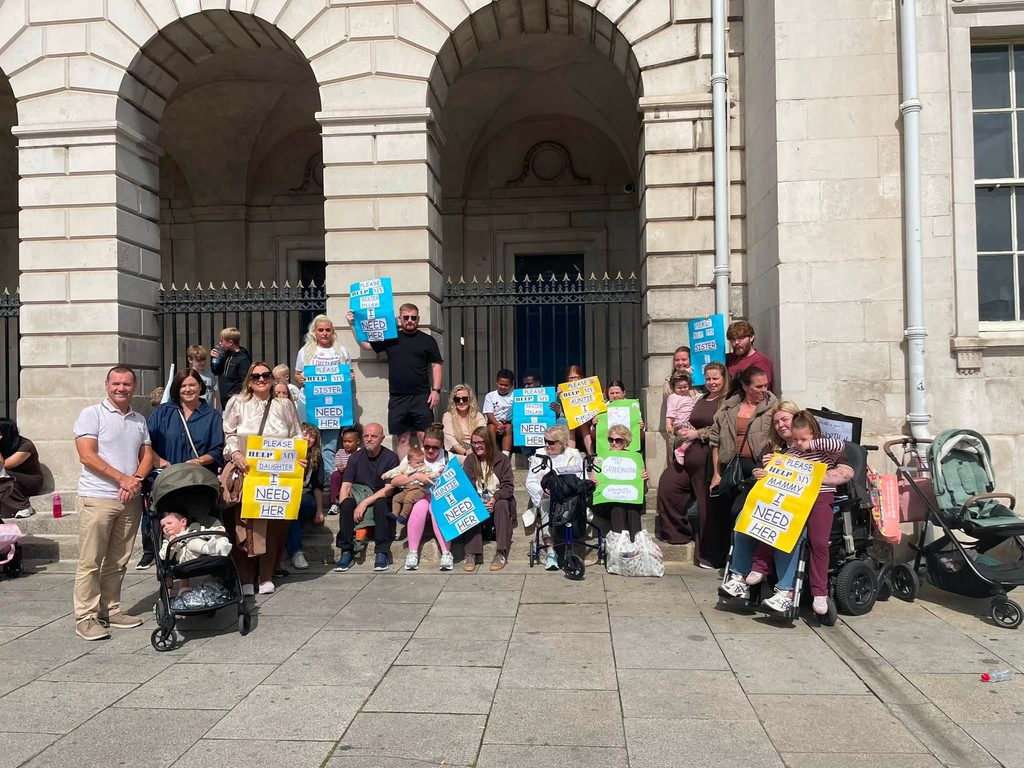
She also helped raise awareness of a public demonstration in Dublin, joining other people with FA, families and supporters in calling for access to Skyclarys.
For Jessi, the message was simple:
“I have a right to live and everything to live for.”
Her willingness to speak publicly transformed her from someone who had always been private into a powerful advocate for herself and the wider FA community.
And her campaign helped bring change. On 25 August 2026, the HSE announced that Skyclarys would be reimbursed for eligible patients with Friedreich’s Ataxia, following further negotiations with the manufacturer.
Skyclarys is not a cure, and it cannot reverse the damage already caused by FA. However, it offers the possibility of slowing the progression of the disease — something that could make a significant difference to Jessi and others living with FA in Ireland.
For Jessi, the decision means hope: hope of continuing to work, remaining independent and, most importantly, having more time to watch Remi grow up.
Her story is a powerful reminder that behind every rare-disease statistic is a person with a family, a career, ambitions and a future they want to protect.
To read Jessi’s full story and learn more about her campaign for Skyclarys click here
🏅 Raising Awareness
What Is Hurler Syndrome? Theresa Shares Her Experience
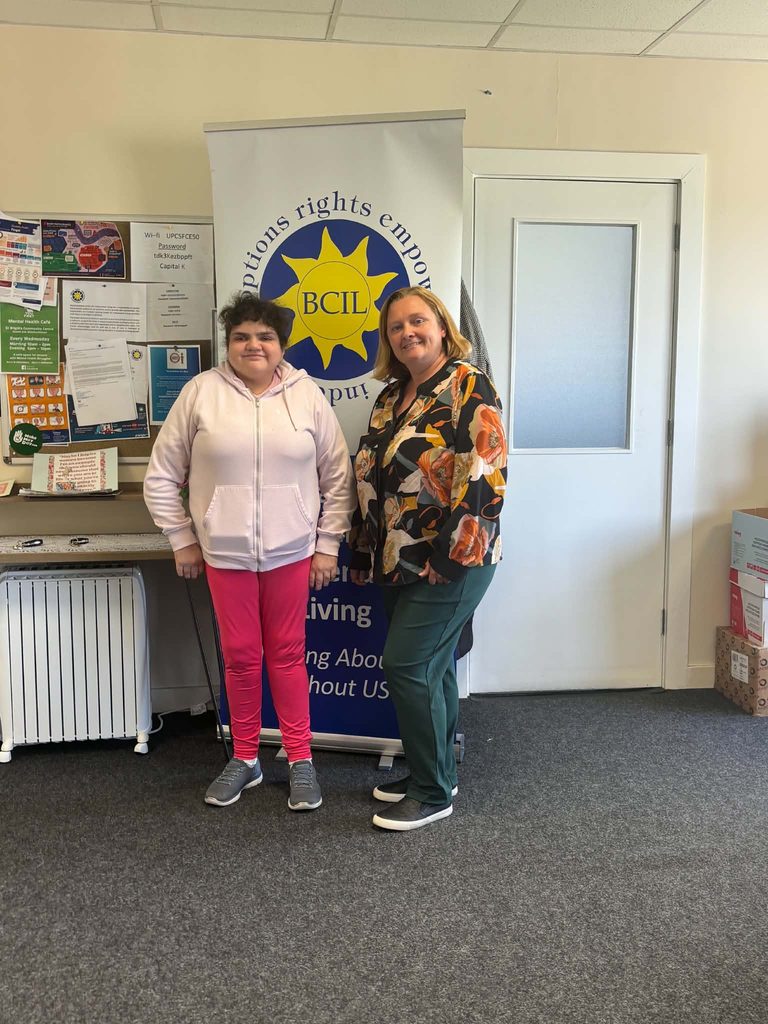
For Theresa, living with Hurler syndrome has been part of her life since birth. Hurler syndrome is a rare inherited metabolic disorder and the most severe form of mucopolysaccharidosis type I (MPS I). It affects the body’s ability to break down certain complex sugars, which can gradually affect the bones, joints, organs and other parts of the body.
Theresa was diagnosed at birth and received a bone marrow transplant when she was younger. While there is currently no cure for Hurler syndrome, treatments such as stem cell or bone marrow transplantation and enzyme replacement therapy can help slow the progression of the condition and manage its effects.
Growing up, Theresa knew that she had a condition, but because Hurler syndrome is so rare, she did not always understand exactly what it meant. She attended regular appointments at Children’s Health Ireland at Crumlin when she was younger and continues to attend hospital appointments as an adult.
One of the biggest challenges Theresa experiences is with her bones and hands. Her fingers have developed a claw-like shape, with the tops of her fingers remaining bent. This can make everyday tasks, such as writing, more difficult. These are some of the challenges that may not always be immediately visible to other people.
Theresa also experienced difficulties socially while growing up. Although primary school in Blanchardstown was generally a positive experience, she faced bullying during secondary school. Eventually, she moved schools and had a much more positive experience.
Education and work have played an important role in building Theresa’s confidence. After leaving school, she attended the National Learning Network in Swords and Mulhuddart, completing Level 3 and Level 4 education. She later completed a Level 5 secretarial course through BCIL, developing skills that she hopes will help her pursue a career in secretarial work, ideally around Crumlin.
Since joining BCIL in 2024, Theresa says her confidence has grown considerably. As someone who describes herself as quite shy, working on the phones and speaking with people in the office has helped her develop her communication and people skills. She enjoys being part of the office and gaining experience across different tasks.
Theresa describes Hurler syndrome primarily as a physical disability. Because it is so rare, she feels it can also be a hidden disability — something that other people may not understand or even realise she is living with. She has not met many people with exactly the same condition, although she has encountered other people living with MPS conditions during her hospital appointments.
Looking ahead, Theresa would like to become more independent while remaining close to her family, who she describes as a great source of support. As the youngest of eight children, family has always been an important part of her life. She would love to have her own independence while still being close enough to the people who support her.
For now, Theresa is happy at BCIL and grateful for the confidence and experience she has gained there. Her story highlights that living with a rare condition is about much more than a diagnosis. Behind the medical appointments and physical challenges is someone with ambitions, skills, relationships and goals for the future.
Theresa hopes that people will look beyond her condition and see her for who she is — someone who wants to work, become more independent, build her confidence and make her own path in life.
📢 Advocacy & Campaign Spotlight
Eradicating Poverty Starts with a Safe Place to Call Home
Every year on 17 October, Ireland marks the International Day for the Eradication of Poverty — an opportunity to raise awareness of poverty, inequality and the barriers that prevent people from living with dignity and security.
In 2026, the focus is on the human right to adequate housing. Having a safe, secure and suitable home is more than having a roof over your head. For people with disabilities and others facing disadvantage, access to appropriate housing can be closely connected to independence, health, safety and the ability to participate fully in community life.
BCIL Disability & Community Support Expo
To help raise awareness and bring people together around these issues, BCIL will host a Disability & Community Support Expo on Wednesday, 14 October, from 2pm to 4pm at Hartstown Community Centre.
The event will provide an opportunity for local people to find information, discover available supports and connect with community organisations. Visitors can explore information stands, collect useful community support booklets and leaflets, and contribute to a Fact Wall exploring the links between poverty, disability and homelessness.
There will also be tea, coffee and refreshments, creating a welcoming space to meet others, ask questions and share experiences.
📅 Wednesday, 14 October 2026
⏰ 2:00pm–4:00pm
📍 Hartstown Community Centre
Whether you are looking for support, information or simply want to learn more about the challenges facing people in our community, everyone is welcome.
💶Budget 2026
What does Budget 2026 mean for Accessible Transport
Ireland’s Budget 2026 includes significant investment in transport, with several measures aimed at making travelling easier, more accessible and more affordable for people with disabilities.
But what could these announcements mean in everyday life for disabled people and their families?
€25 million for transport accessibility
An additional €25 million has been allocated for transport accessibility and retrofit measures.
The funding is intended to improve the accessibility of public transport, including upgrading existing infrastructure and increasing the availability of accessible vehicles.
For disabled passengers, this could mean better access to buses, trains, stations and other public transport infrastructure.
But accessibility is about more than the vehicle itself. It also means working lifts and ramps, suitable wheelchair spaces, accessible information, accessible bus stops and stations, and staff who understand the needs of disabled passengers.
€69 million for school transport
Budget 2026 provides an additional €69 million for the School Transport Scheme, with around 26,700 students with disabilities expected to benefit.
For families, reliable and accessible school transport can make a significant difference. It can reduce the pressure on parents and carers who may otherwise have to provide transport themselves, while helping children and young people get to school safely and consistently.
For a student with a disability, accessible school transport can also be the difference between being able to attend school independently and relying on a parent or carer to make the journey.
€940 million for bus and rail services
Public Service Obligation funding for subsidised bus and rail services will increase to €940 million in 2026.
Investment in public transport can mean more services and better connections, but increased services will only benefit disabled passengers if those services are genuinely accessible.
A bus or train may be accessible, for example, but the journey can still fail if someone cannot get to the bus stop, a station lift is broken, there is no suitable wheelchair space, or accessible transport is unavailable at the other end.
This is the “whole journey” problem. Accessibility needs to be considered from the moment someone leaves their home until they reach their destination.
€13 million for people who rely on private transport
Not everyone with a disability can use public transport for every journey. Some people depend on cars or accessible vehicles because of their mobility needs, or because public transport is unavailable where they live.
Budget 2026 increases funding for the Disabled Drivers and Disabled Passengers Scheme Fuel Grant from approximately €11 million to €13 million.
This recognises the additional transport costs faced by some disabled people who rely on private vehicles. It could be particularly important for people in rural areas, where public transport options can be limited and driving may be essential for accessing healthcare, education, employment and social activities.
Looking ahead
Budget 2026 represents a significant investment in accessible transport, school transport, public transport and private transport supports.
Accessible transport is about far more than getting from A to B. It is about independence, education, employment, healthcare and being able to participate fully in society.
The challenge now is to make sure the funding translates into practical improvements — and that accessibility is considered across the whole journey, not just at the point where someone boards a bus or train.
💡 Did You Know?
✔ BCIL has over thirty years’ experience supporting peer-led self-advocacy.
✔ Rare diseases such as FA and Hurler syndrome deserve to be recognised and supported.
✔ Budget 2026 provides €25 million for accessible transport.
✔ The Eradication of Poverty expo hosted by BCIL will take place on Oct 14th in Hartstown.
❤️ Get Involved with BCIL
BCIL welcomes volunteers who would like to support:
• Community events
• Peer support
• Advocacy
• Transport
• Administration
• Fundraising
• Befriending
Interested in volunteering? Get in touch with BCIL → https://bcil.ie/volunteers
📚 Resource Corner
Useful Supports:
- Accessible Transport
- Free Travel Scheme
- Disabled Drivers & Disabled Passengers Scheme
- Transport Support for Students with Disabilities
- Local Authority Housing Supports
- Disability Federation of Ireland (DFI)
- Citizens Information
- Family Carers Ireland
If you’re unsure where to begin, BCIL is always happy to help point you in the right direction.
💬 Quote of the Month
“I have a right to live and everything to live for.” — Jessi Abbey
🌟 This Month’s Question
What does independent living mean to you?
Whether it’s having your own home, choosing where you work, getting around your community, making your own decisions or simply having the freedom to live life on your own terms, we’d love to hear what independence means to you.
🔜 Looking Ahead
Next month we’ll bring you:
- Celebrating more voices and personal journeys from our community
- New conversations and perspectives on Disability Matters
- Updates on upcoming BCIL activities, events and opportunities
- Practical information to support independence and everyday living
- New connections and collaborations across our local community
- Following the campaigns and issues that are creating positive change
📬 Stay Connected
Subscribe to receive the BCIL Monthly Newsletter and stay connected with everything happening across our community.
Each edition brings you, Inspiring stories → Disability advocacy → Community news → Independent living resources → Upcoming events → Volunteer opportunities → Practical supports
Visit the BCIL website to:
🎙 Listen to Disability Matters
📖 Read the latest BCIL stories
❤️ Get involved as a volunteer or community partner
Also follow us on Social Media:
Facebook → https://www.facebook.com/BCIL.ie/
Instagram → https://www.instagram.com/independentliving23