
What does it mean to grow up with a visual impairment while advocating for change at such a young age?
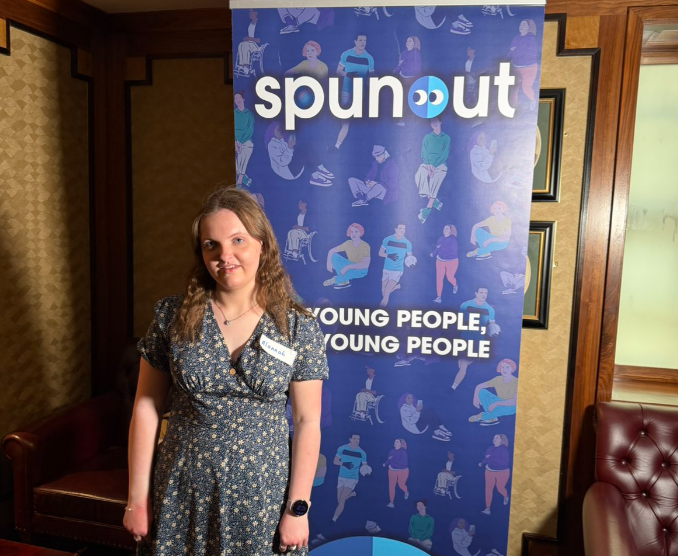
In this inspiring episode of Disability Matters, John Comiskey speaks with Alannah Moriarty, a passionate disability advocate who shares her personal journey of living with vision impairment, navigating education, learning Braille, and working tirelessly to improve accessibility for others.
Diagnosed at just six months old with optic nerve hypoplasia, Alannah was born completely blind. At just eighteen months of age, after extensive fundraising by family, friends and supporters, she travelled to China for stem cell treatment, which enabled her to gain the limited sight she has today.
“I was born completely blind, and after stem cell treatment I gained the little bit of sight that I have today.”
Despite the challenges, Alannah says she was fortunate to have a supportive family and an outstanding primary school that embraced inclusion from the very beginning.
“I had a very supportive SNA, wonderful teachers and a vision teacher who made sure I had everything I needed,” she explains.
Learning Braille — and Teaching Others
Alannah is both a white cane user and a fluent Braille reader.
She began learning Braille as a preschool child and describes it as becoming almost second nature.
“While everyone else was learning to read and write, I was learning print and Braille at the same time.”
But learning Braille was only the beginning.
Even as a primary school pupil, Alannah began educating classmates about blindness and accessibility, hoping younger visually impaired students would have an easier experience than she did.
That passion has continued into her teenage years.
She now delivers presentations, creates educational videos and regularly speaks about how schools and communities can become more inclusive.
“It’s My Eyes That Don’t Work”
One of the most powerful moments of the interview comes when Alannah describes how people often misunderstand disability.
“People think maybe I can’t understand them. I have to say, ‘Look, it’s my eyes that don’t work — my brain works perfectly fine.'”
She explains that many people simply don’t know how to interact with someone who has a visual impairment, sometimes speaking to accompanying adults instead of speaking directly to her.
While she has made wonderful friends, she admits making new friendships can sometimes be difficult because people are unsure how to approach disability.
Fortunately, she has also found a strong community among other young people with vision impairments who understand her experiences.
Different Experiences at School
Although Alannah describes primary school as exceptionally supportive, she says secondary school has been much more challenging.
With over 1,200 students, she often has to advocate for herself to receive the accommodations she needs.
“Most of the advocacy I do in secondary school is actually advocacy for myself.”
Rather than accepting alternatives that don’t meet her needs, she has learned to confidently explain what genuine accessibility requires.
Giving Young People a Voice
Outside school, Alannah is deeply involved in youth leadership.
She serves on her Student Council and is an active member of Comhairle na nÓg, where young people influence local and national decision-making.
Through the organisation she has attended events in Leinster House, contributed to discussions on education and accessibility, and ensured disability is part of every conversation.
“Whatever we’re doing, I always make sure accessibility is included.”
She believes disability should never be an afterthought.
Everyday Accessibility Still Matters
Living with a visual impairment presents challenges many people never notice.
Uneven footpaths, temporary signs, poor street layouts and inaccessible public spaces can all create obstacles.
Public transport can also be difficult.
Alannah says one of the biggest frustrations is that many passengers are reluctant to offer priority seating.
“It’s much safer for me to sit down, but people often don’t realise that.”
Teaching Through Experience
Over the years Alannah has produced educational resources used by teachers across Ireland.
A presentation she created as a primary school pupil was later shown at National Council for Special Education (NCSE) conferences to help train teachers and Special Needs Assistants.
She has also worked with Sight and Sound Technology and other organisations promoting accessibility and Braille literacy.
Looking Beyond Disability
Despite everything she has achieved, Alannah is still a typical teenager.
She loves music, spending time with family, singing whenever the opportunity arises, and enjoying life with friends.
Her disability is only one part of who she is.
A Simple Message
As the interview draws to a close, Alannah leaves listeners with practical advice that applies to every disability.
“If you meet someone with a disability, don’t assume you know what’s best. Just ask if they need help—and ask what kind of help they need.”
Her story is a powerful reminder that accessibility begins with listening, inclusion begins with conversation, and young people can be some of society’s strongest advocates for change.
This interview aired on Disability Matters on 92.5 Phoenix FM, a programme produced by Blanchardstown Centre for Independent Living (BCIL).
Tune in to Disability Matters Thursdays at 4PM | Repeats: Mon 3AM, Tue 3AM & 7AM | Also available on Mixcloud and on bcil.ie/radio.
Compiled by Valentyna Hordiichuk